Notes on prior authorization, claims, and running a specialty practice — from our team, physicians, and patients.
When a prior authorization gets denied, most patients find out the same way: a phone call from their doctor's office saying the insurance company said no. No explanation of what criteria were missing. No timeline for when it might get reconsidered. No indication of whether anyone…
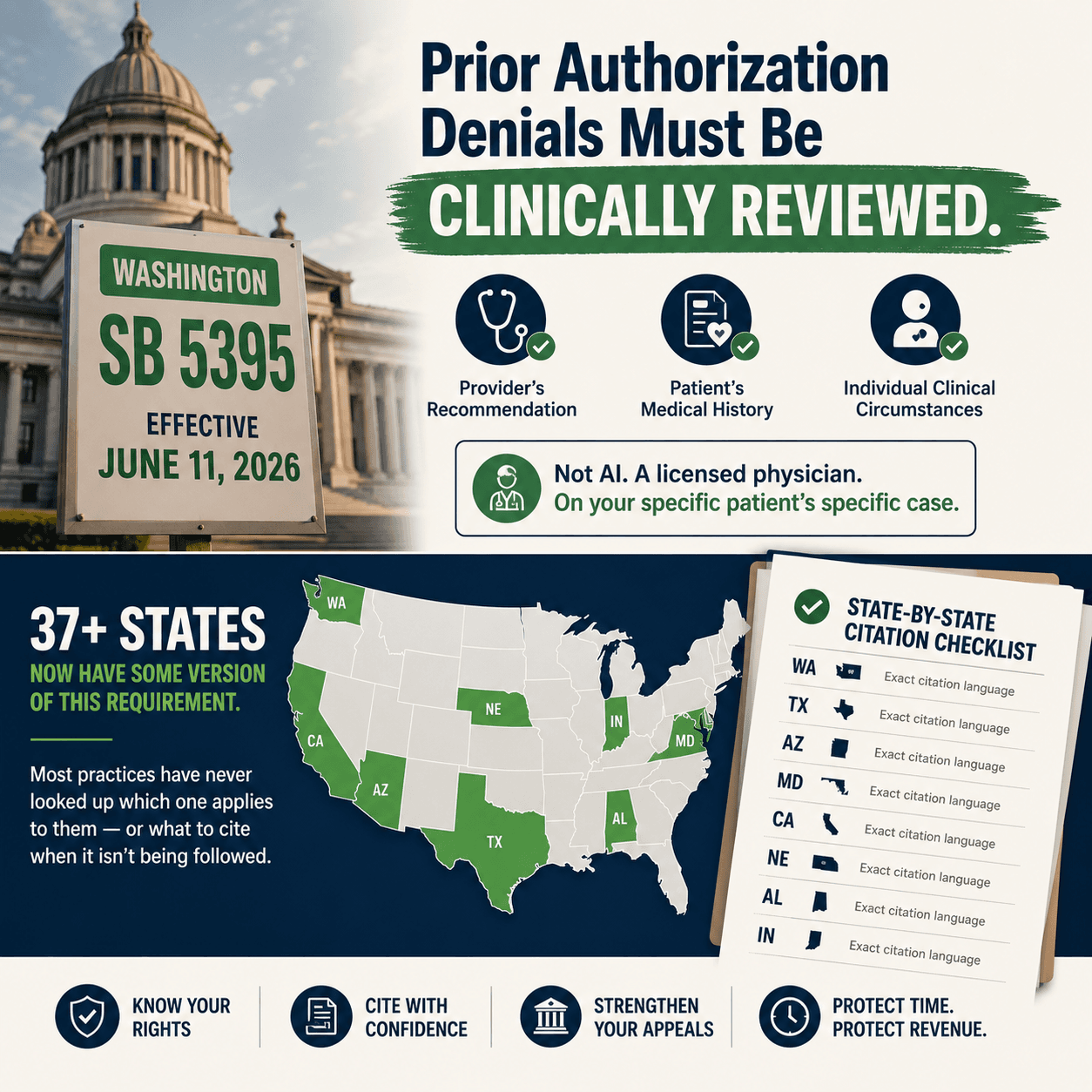
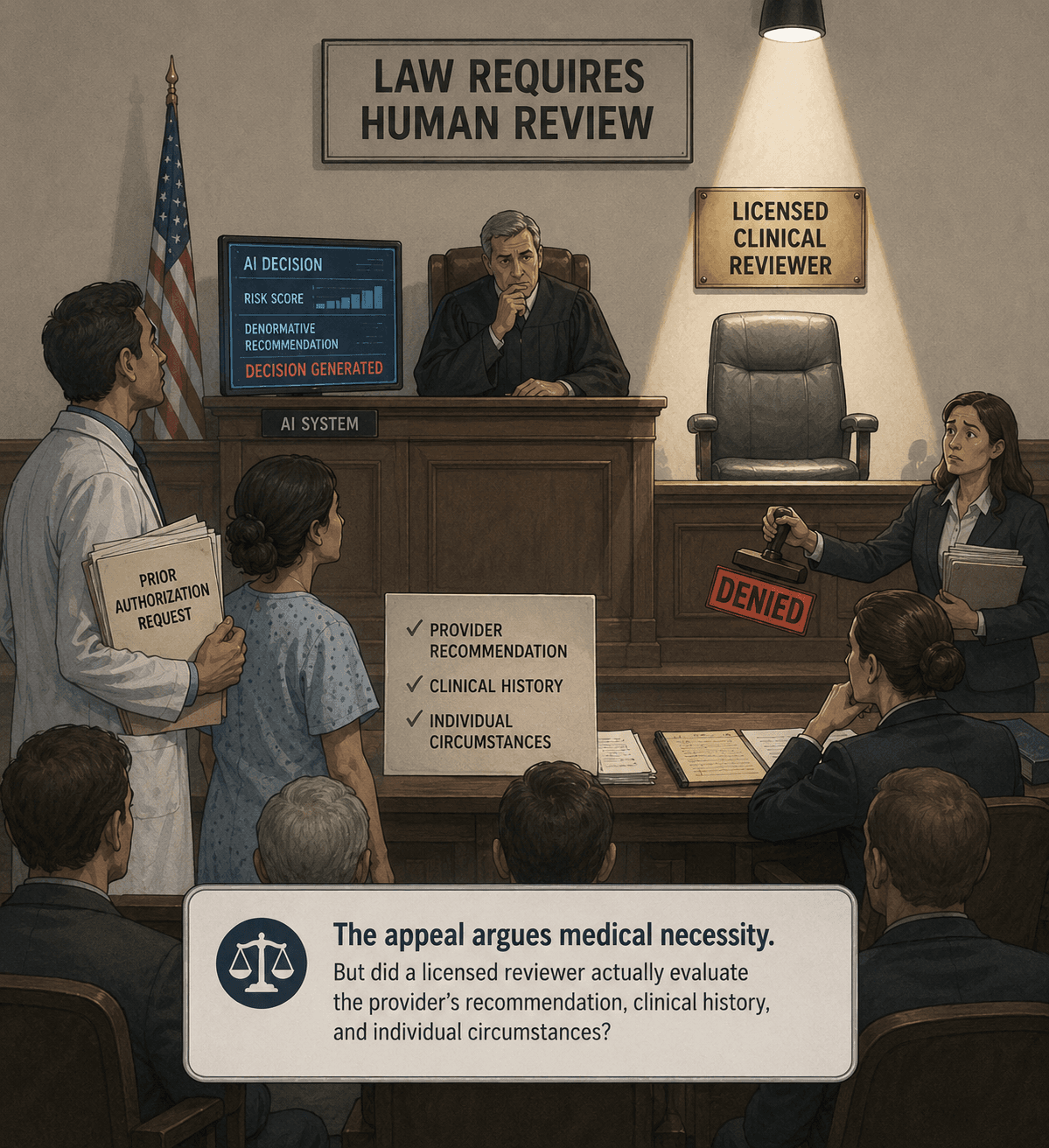
Washington's SB 5395 took effect June 11, 2026. It says this plainly: a determination of medical necessity shall be made only by a licensed physician or a licensed health professional working within their scope of practice. Algorithms may be used to process and approve prior auth…
Your top payer just published something you've probably never looked at. Under CMS's Interoperability and Prior Authorization Final Rule — CMS0057F, the same rule that shortened standard prior auth decisions to 7 calendar days — payers were required to begin publicly reporting sp…
Ask independent practices what their biggest priorauth headache is, and the specifics change every time — but the underlying patterns don't. Across research, reporting, and the operational data available on this problem, the same six issues show up constantly. Most of them aren't…
Most of what gets said about payer AI is either fear — "it's designed to deny you" — or hype — "it makes everything faster and fairer." Neither one actually explains what the system is doing. Here's the plain version. What's actually happening when a payer's AI reviews your submi…
Most practices work prior authorizations and denials in the order they arrive. That feels fair. It's also the single easiest way to lose the ones that actually mattered most. Why firstinfirstout is the wrong default Not every PA or denial carries the same stakes. A missingdocumen…
A claim gets paid. Not denied — paid. Just less than it should have been, and nobody flagged why. That's not a billing error. Increasingly, it's a deliberate algorithm doing exactly what it was built to do. The denial you don't notice Most of the conversation around payer AI focu…
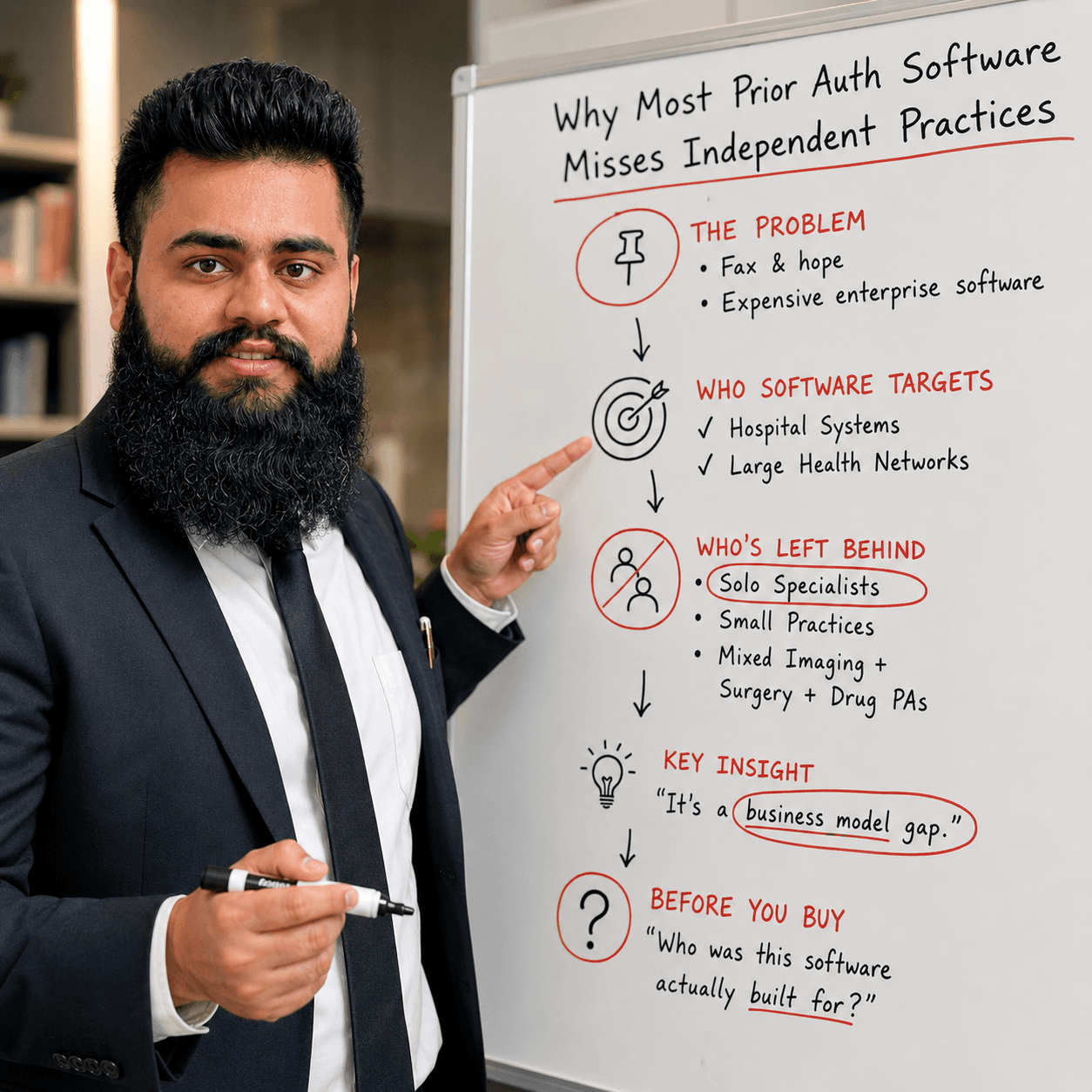
"I can keep faxing things and hope, or I can spend more on software than I pay a parttime employee." That's roughly how one practice manager described her options to me — and it wasn't an exaggeration. It's a fair summary of the actual choice most independent practices are handed…
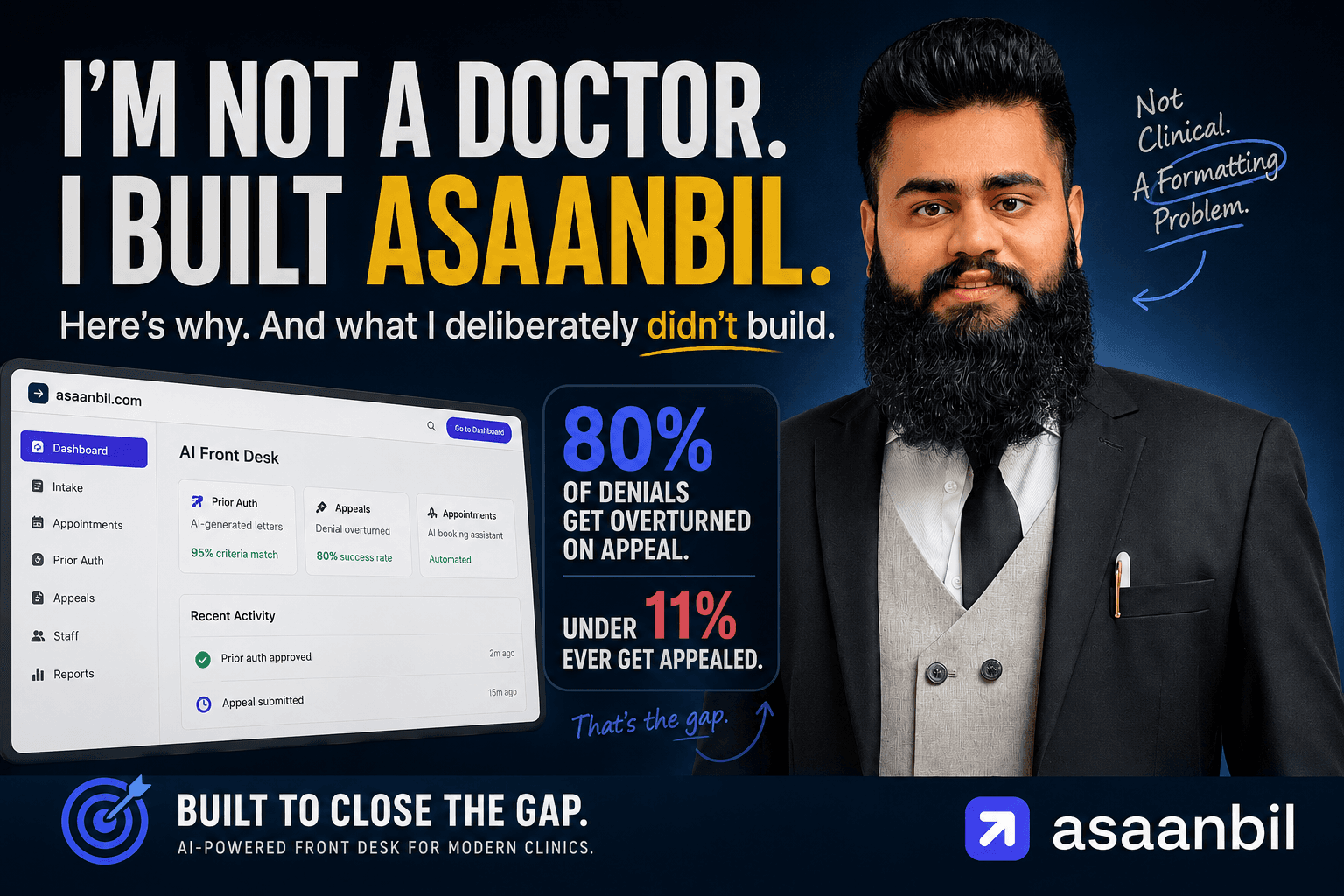
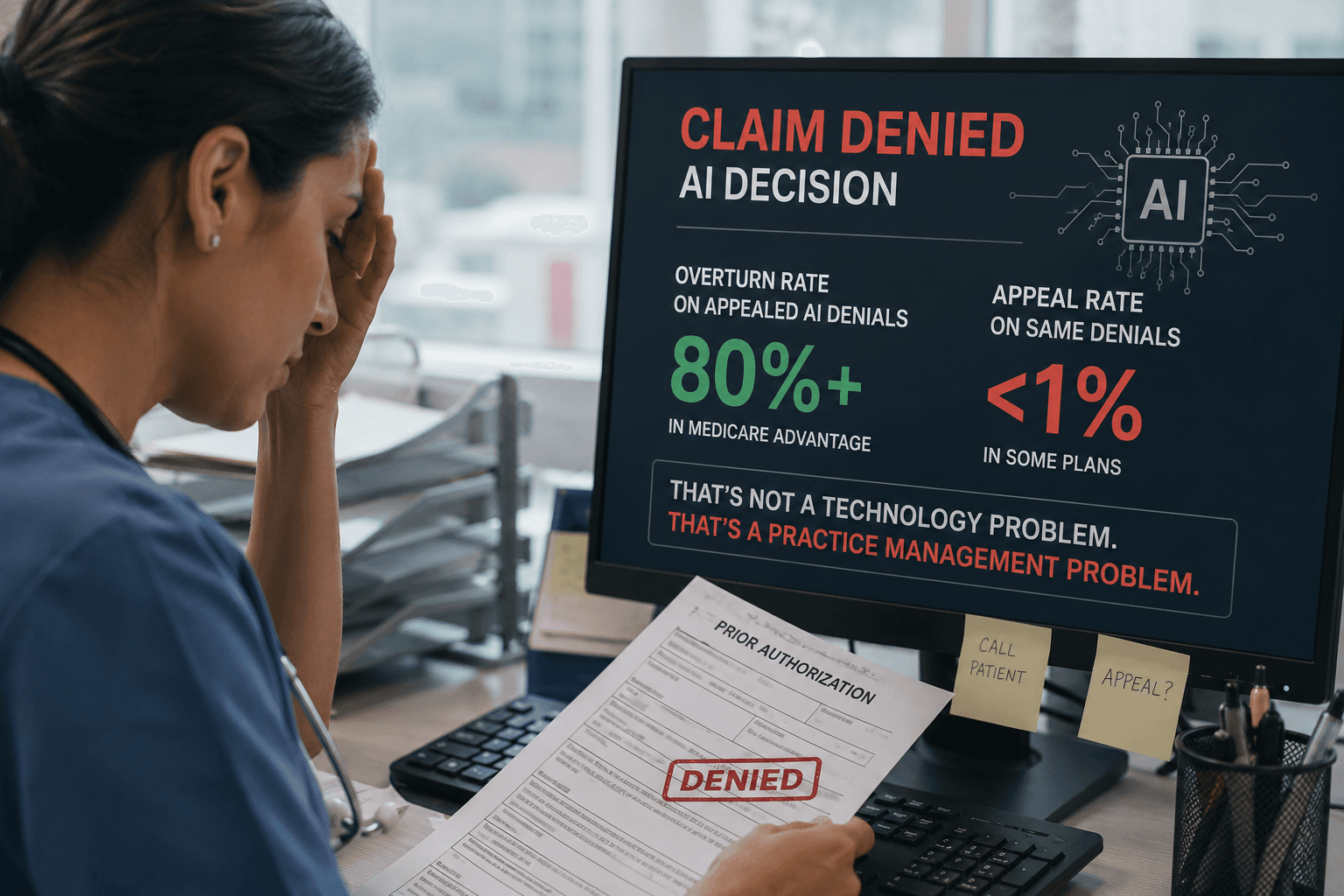
80%+ overturn rate on appeal. Almost nobody appeals. I think about that gap constantly, because I don't think it's really a story about AI versus doctors. I think it's a system betting that most practices won't bother fighting back — and winning that bet by default, not by being…
"I don't have time" is the right answer to the wrong question. Nobody has time to evaluate new software. Every practice manager has heard a pitch before and knows exactly how long "quick call" and "just a demo" actually take. The objection is real, and it's reasonable. But it's a…
I'm not a doctor. I've never sat across from a payer's peertopeer reviewer, never had a patient's care delayed because of a letter I was responsible for writing. What I did was notice the same pattern over and over, across specialties that otherwise had nothing in common — and on…
Eight years ago, more than 270,000 physicians ran their own practice. Today it's 120,900 — a drop of over 150,000, and the pace hasn't slowed. 82% of practicing doctors are now employed by a hospital or corporate entity, according to Avalere Health data compiled for the Physician…
A prior auth denial comes back. Somewhere in your state, there's a decent chance a law says a machine wasn't allowed to make that call alone — and most practices have no idea it exists, let alone that they could have cited it. The trend most practices haven't caught up to Over th…
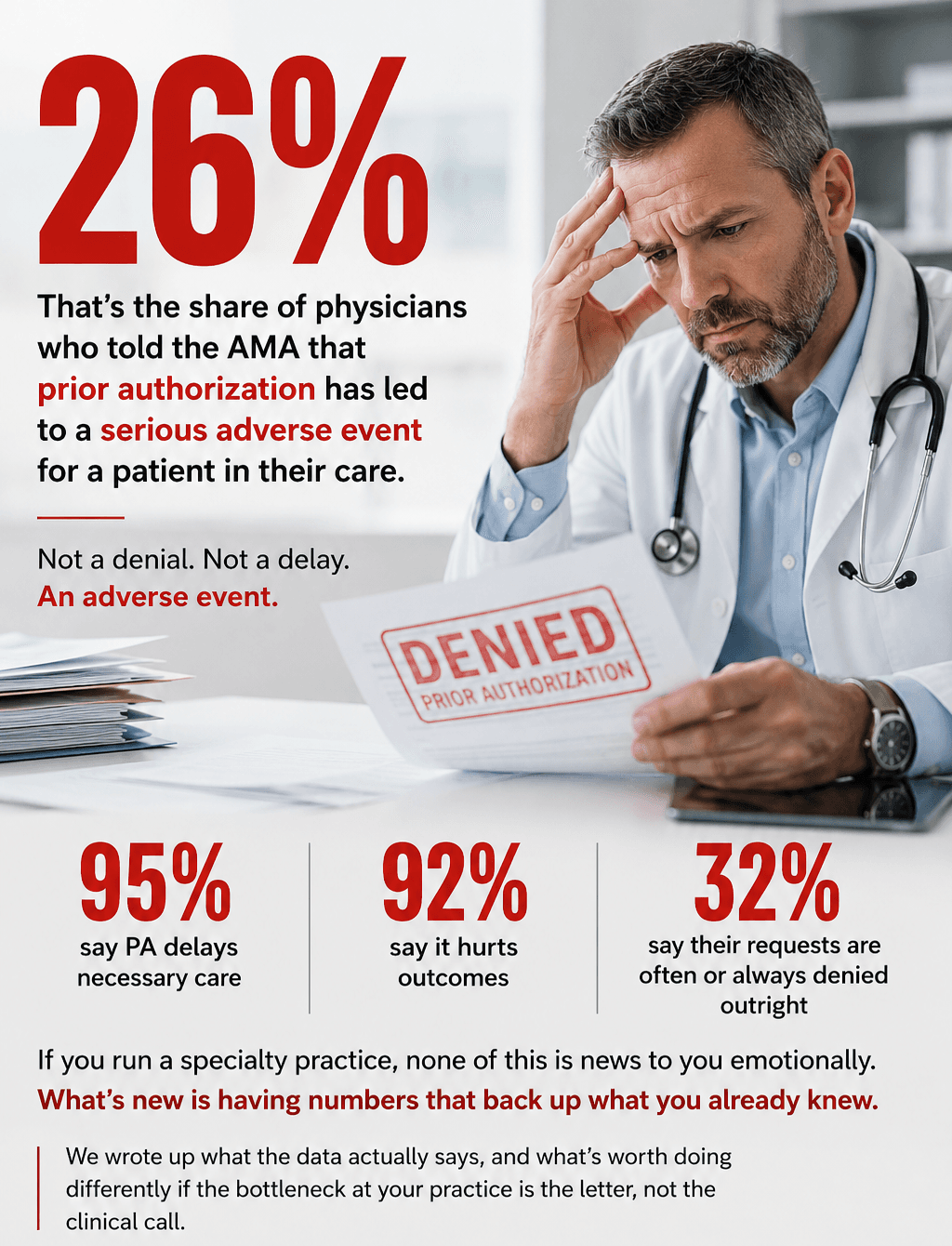
For years, prior authorization has been talked about as an efficiency problem — a source of burnout, wasted hours, and frustrated staff. New data from the American Medical Association makes clear that framing understates what's actually happening. In its 2026 Prior Authorization…
"Does not meet clinical criteria." That's the entire reason on a lot of imaging denial letters practices receive every week. No named criterion. No explanation of what was missing. Nothing to actually respond to except the same documentation, resubmitted, hoping for a different o…
An MRI gets denied. Your staff drafts an appeal, sends it to the payer, and waits. Weeks later, still nothing. Eventually someone calls to check status, and the answer is worse than a rejection: the appeal was never actually reviewed. It went to the wrong place entirely, and the…
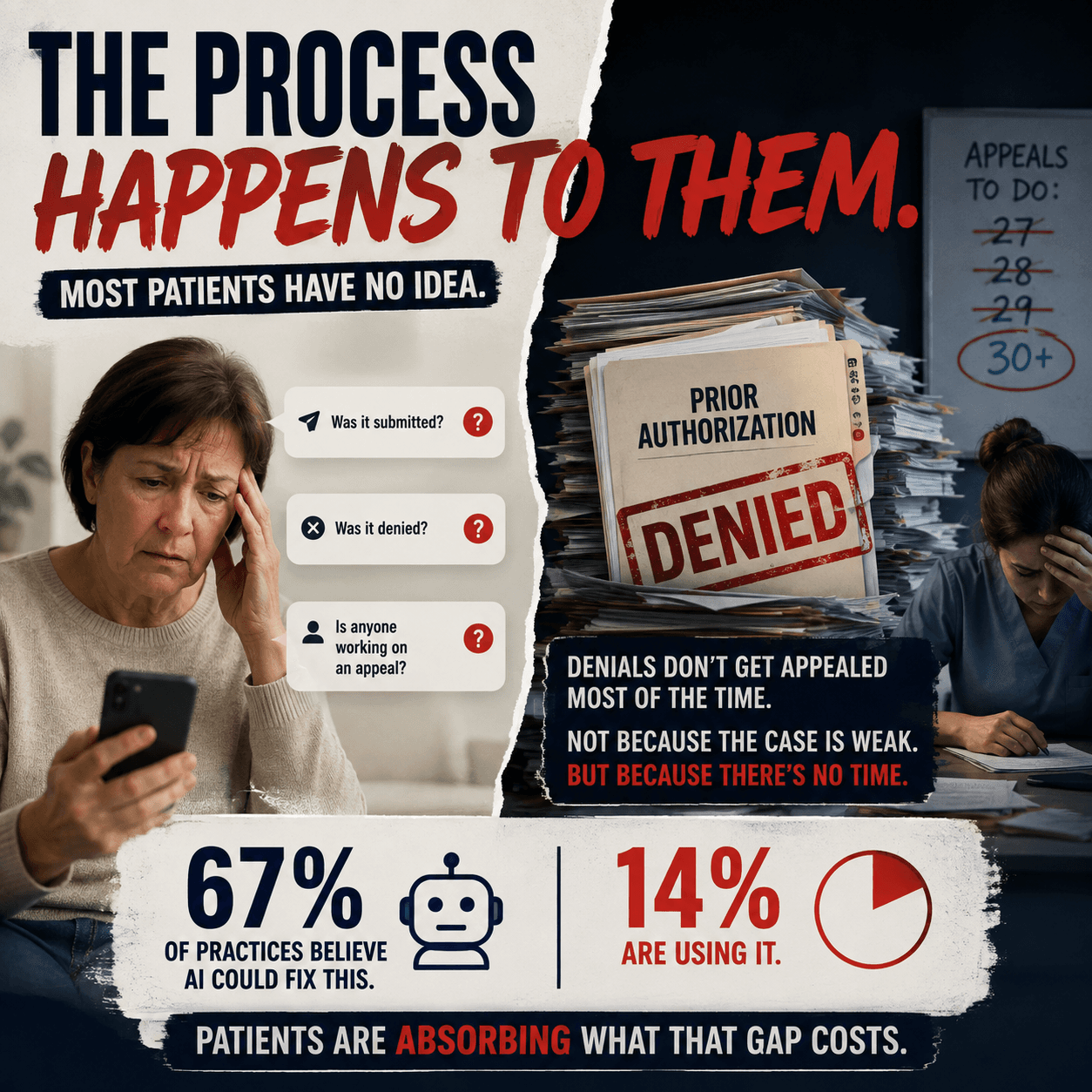
Ask providers if AI could help with claim denials, and most say yes. 67% believe it could genuinely help. Ask how many are actually using it: 14%. That's not a story about skepticism. It's a story about access. The numbers behind the gap Experian Health's State of Claims survey —…
Fortytwo prior authorizations sitting in the inbox. Thirteen hours a week your staff spends on them. And the one person who handles it all just called in sick. If you've gone looking for software to fix that, you've probably noticed something odd: everything on the market seems b…
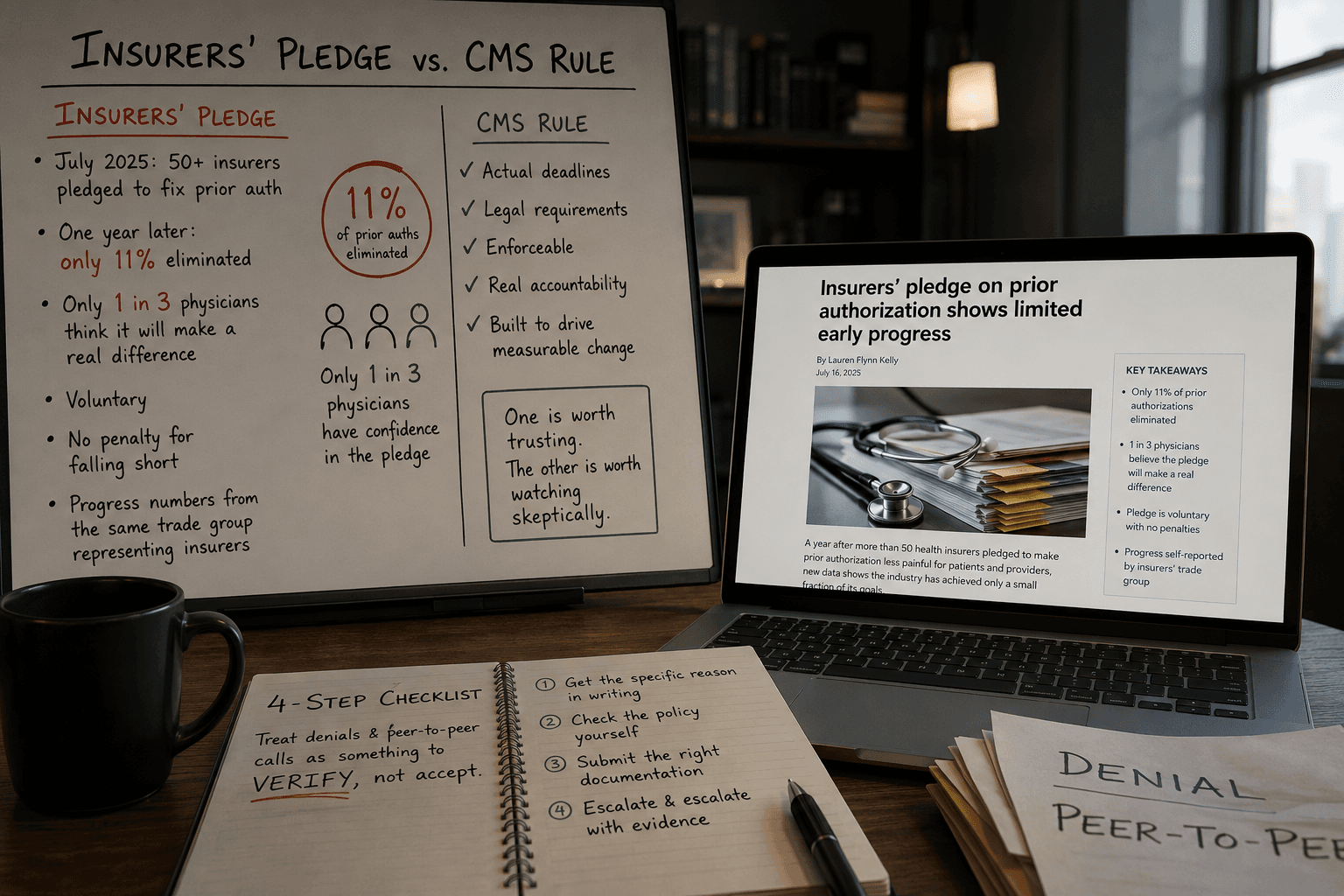
In July 2025, more than 50 major health insurers stood alongside HHS Secretary Robert F. Kennedy Jr. and CMS Administrator Mehmet Oz in Washington and pledged to fix prior authorization. UnitedHealthcare, Aetna, Cigna, Humana, Elevance Health, dozens of Blue Cross Blue Shield pla…
A practice manager submits a prior authorization for a lumbar MRI. Clean chart. Clear conservativetreatment history. The kind of case that should sail through. It's denied in under a minute — faster than any human reviewer could plausibly have read the file. That's not a fluke. I…