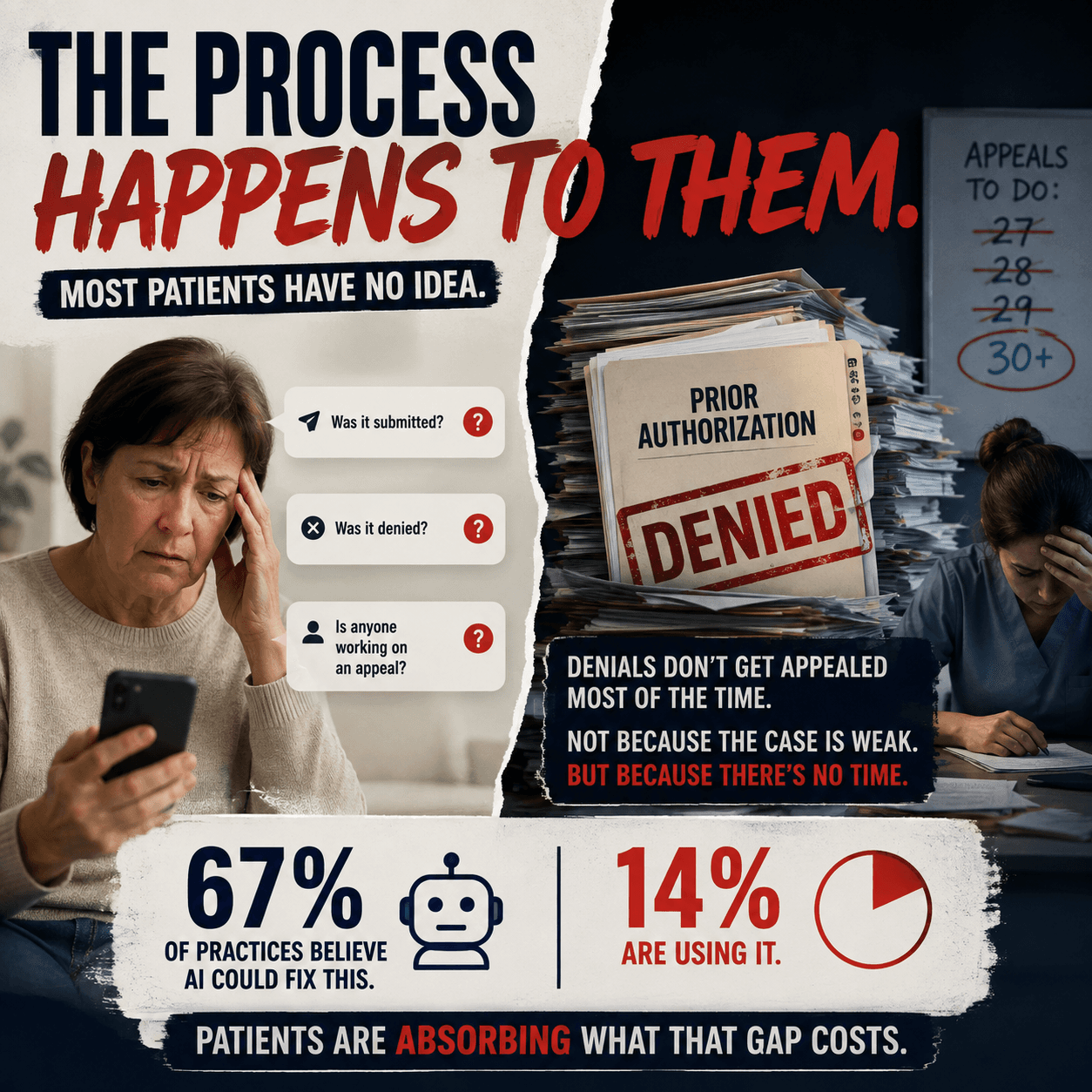
37+ States Now Require a Human to Review Your AI-Denied Prior Auth — Does Yours?
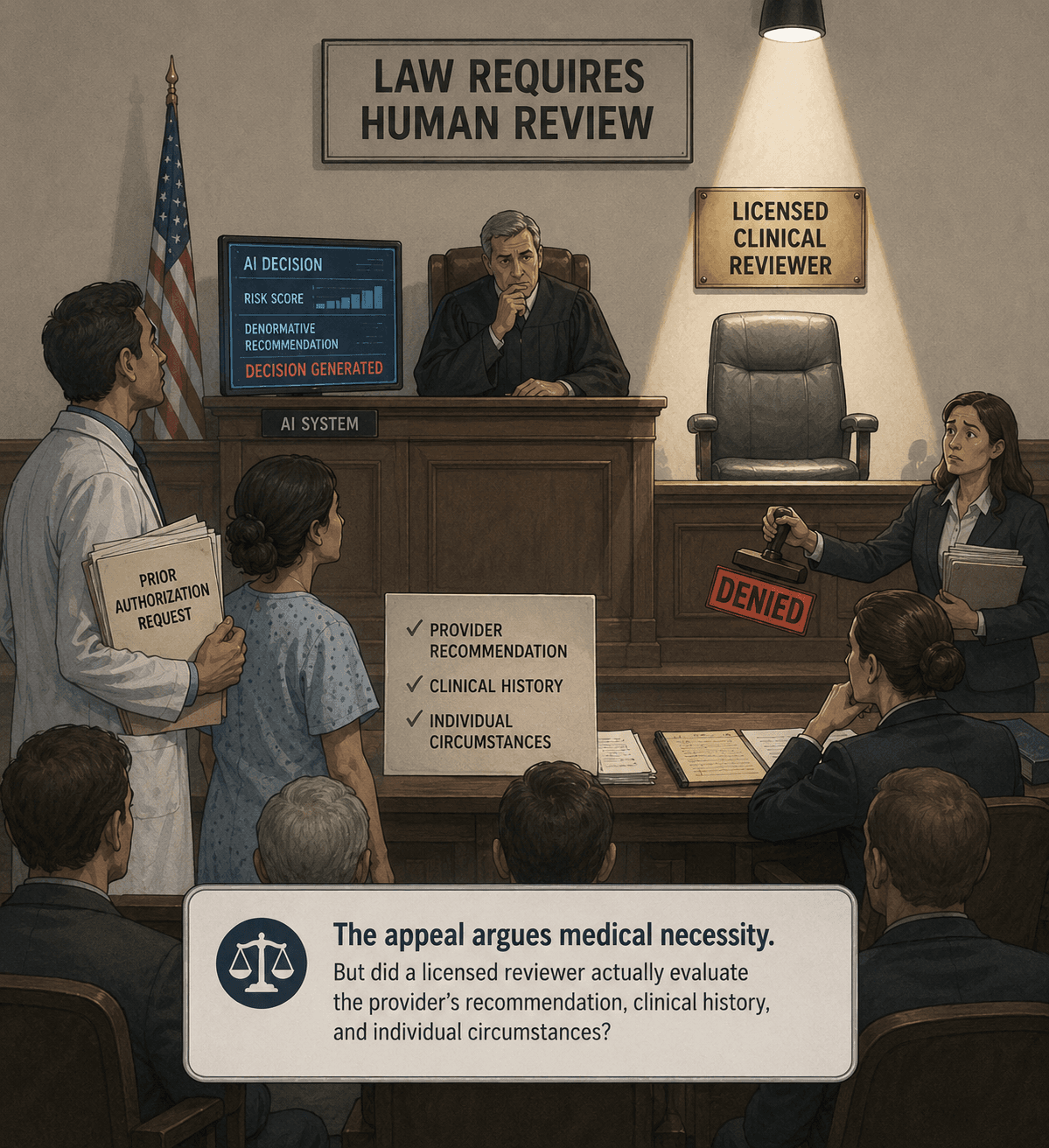
A prior auth denial comes back. Somewhere in your state, there's a decent chance a law says a machine wasn't allowed to make that call alone — and most practices have no idea it exists, let alone that they could have cited it.
The trend most practices haven't caught up to
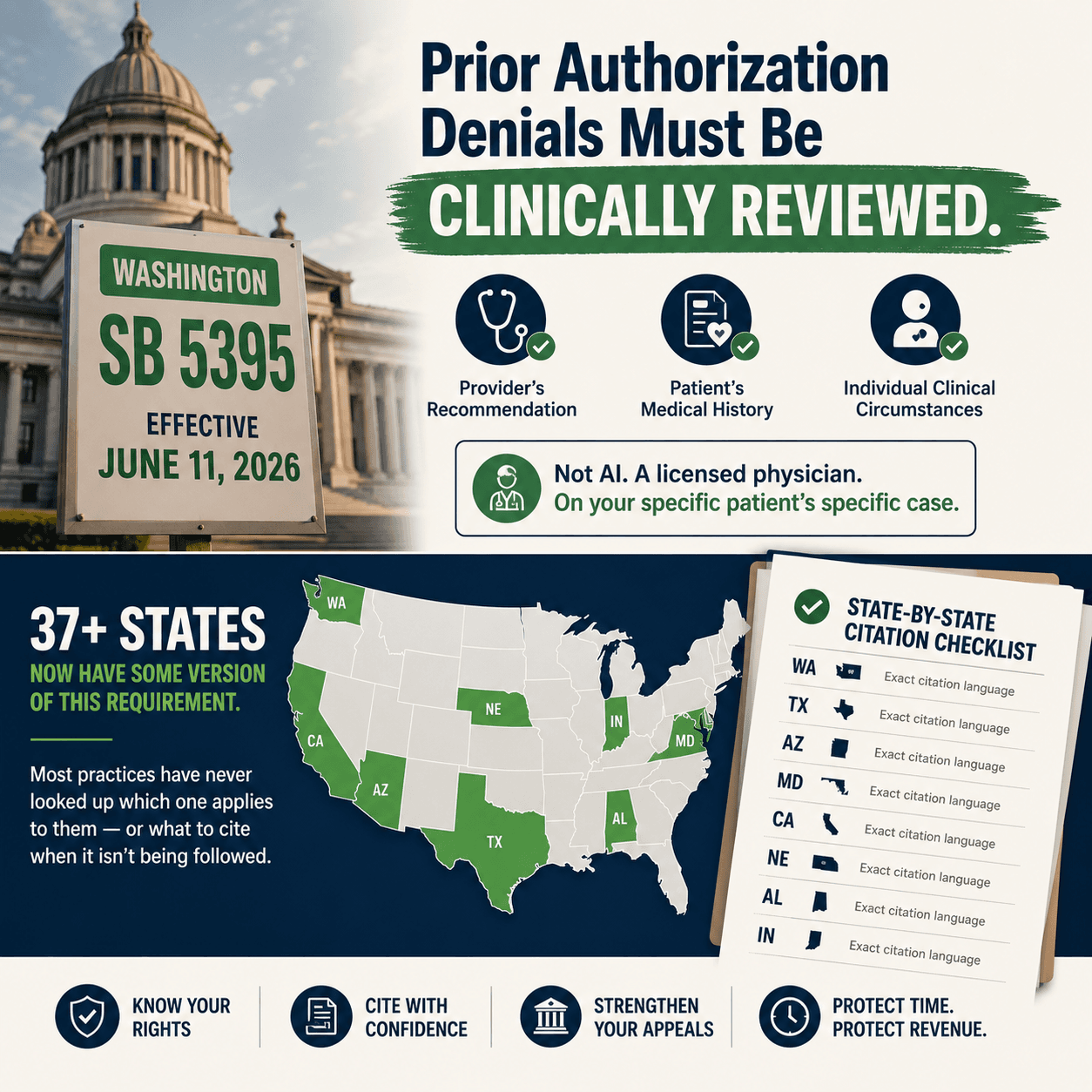
Over the past two years, and accelerating sharply through 2026, more than 37 states have enacted or introduced legislation specifically regulating how insurers use AI in prior authorization and claims decisions. The themes vary state to state, but the core requirement repeats almost everywhere: a licensed clinician has to be meaningfully involved in the actual denial. AI can assist the process, but it can't be the sole basis for saying no.
This isn't one federal rule to memorize once. It's a patchwork that's still expanding, and the specifics differ enough between states that a general awareness of "AI regulation exists" isn't the same as knowing what your own state actually requires.
What some of these laws actually say
A few concrete examples show how specific this has gotten:
Washington's SB 5395, effective June 11, 2026, is one of the most detailed. Only a licensed physician or health professional may deny a prior authorization based on medical necessity, and the law spells out exactly what that reviewer has to evaluate: the requesting provider's recommendation, the patient's medical and clinical history, and their individual clinical circumstances — not group-level data, and not a rubber stamp on an algorithm's output.
Texas prohibits utilization review agents from using an automated decision system to issue an adverse determination without human oversight. Arizona and Maryland prohibit AI from being the sole basis for a medical necessity denial outright. California, Nebraska, Alabama, and Indiana all have comparable laws requiring a licensed physician or healthcare professional to make the final call.
A newer wrinkle: bills addressing AI-driven claim "downcoding" — where an insurer's algorithm reduces a claim's payment without a physician reviewing that decision — are moving through seven states this year, including California, Illinois, Maryland, and Oregon. That's a distinct issue from outright denial, worth watching separately if downcoding (rather than flat denial) shows up in your own claims.
And transparency requirements are starting to stack on top of the review requirements. Utah's law, effective January 1, 2027, will require insurers to publicly disclose whether AI was involved in reviewing a given prior authorization request at all.
Why this is worth more than background knowledge
Most practices treat a denial purely as a clinical question: the payer said no, so the path forward is arguing medical necessity. That's necessary, but if your state has one of these laws on the books, there's a procedural question worth asking before that — was this denial actually reviewed by a licensed human who evaluated this specific patient's history and circumstances, or is it reasonable to ask whether it was?
If a payer can't confirm that a qualified human reviewer actually evaluated the individual case, rather than running it through a model trained on aggregate data, that's a legitimate thing to raise directly, in writing, citing the specific law by name — before or alongside the clinical argument.
What to actually do with this
Look up your own state's specific law rather than assuming a neighboring state's rule applies — search your state name plus "AI prior authorization law," or check your state insurance commissioner's site directly.
Ask explicitly, in writing, whether a licensed clinician reviewed the specific case — not just whether "the request was reviewed" in some general sense. If your state's law requires evaluation of the patient's individual history and circumstances, ask whether that specific standard was actually met.
Cite the law by name and number in the appeal if the answer is vague or unsatisfying. A specific statutory citation carries more weight than a general complaint about AI being involved.
Track denials that come back unusually fast for cases with real clinical complexity. Speed alone doesn't prove a human wasn't involved, but it's a reasonable trigger to ask the question directly.
The part worth acting on now
This legal landscape is moving fast and unevenly, state by state, which makes it genuinely inconvenient to track — but that inconvenience is exactly why it's underused leverage right now. A specific, citable legal requirement that a real clinician looked at this specific patient is a stronger opening than a general appeal, and most practices aren't using it yet simply because they don't know it exists.
Keeping track of criteria, denial reasons, and the applicable law by state is exactly the kind of detail-heavy work asaanbil.com's letter and appeal drafting is built to absorb — structured, criteria-cited letters with a physician still reviewing and approving before anything goes out. asaanbil.com (https://asaanbil.com)
Comments (0)
Sign in to like or comment.
No comments yet.