The Prior Authorization Gap Nobody Talks About — Because It Happens to Patients, Not Practices
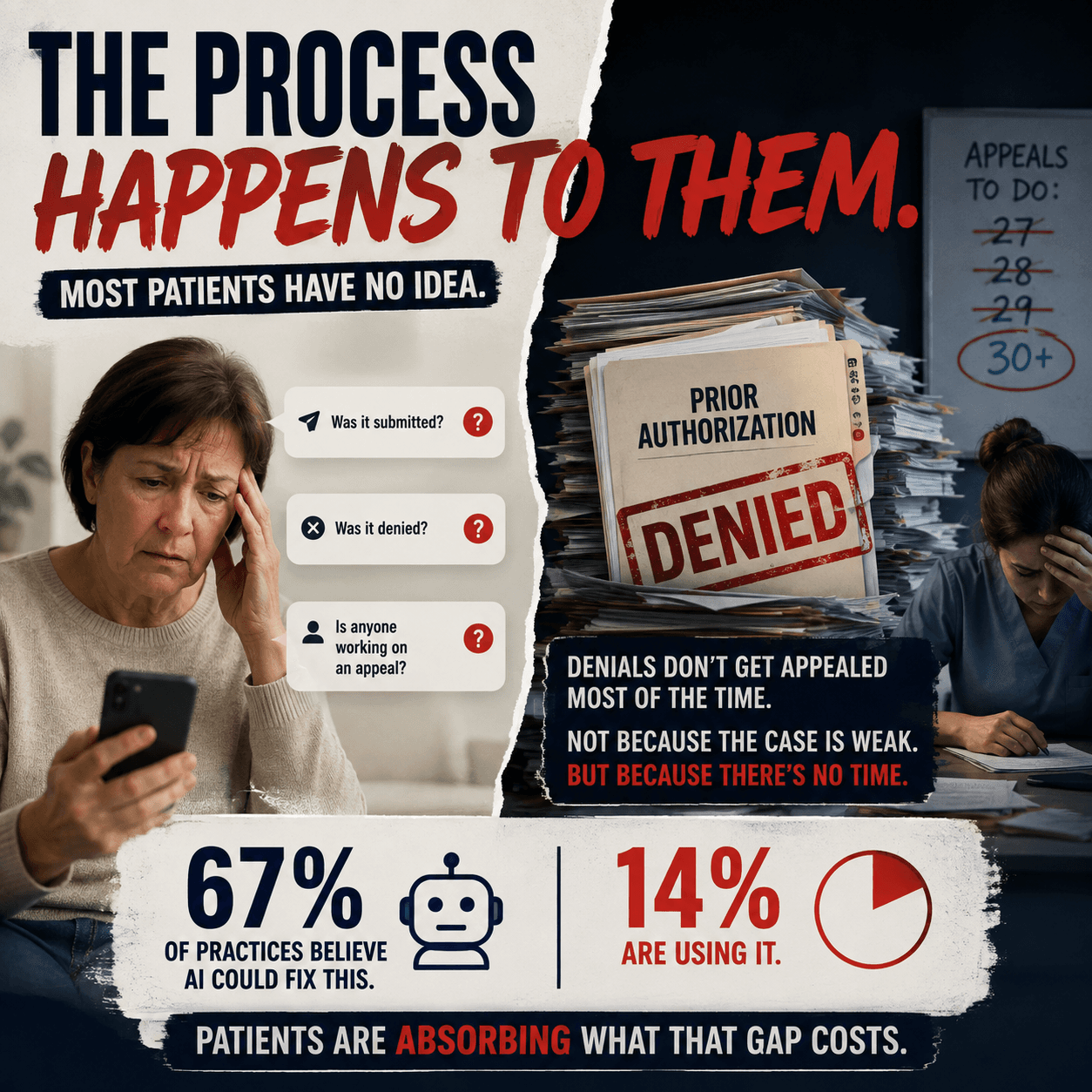
When a prior authorization gets denied, most patients find out the same way: a phone call from their doctor's office saying the insurance company said no.
No explanation of what criteria were missing. No timeline for when it might get reconsidered. No indication of whether anyone is working on an appeal.
That's not a communication failure. It's a structural one — and the AI adoption gap at the practice level is a large part of why it keeps happening.
The gap patients are living inside
67% of medical practices believe AI could genuinely help with prior authorization and admin. Only 14% are actually using it.
That's a technology adoption problem on the practice side. But patients are the ones absorbing what it costs.
Here's what that gap looks like from the other side of the waiting room:
Delays in care. When a prior authorization moves through a manual, high-volume queue, the patient waits. A procedure that could have been scheduled this week gets pushed to next month. In some cases, treatment timing matters clinically. In all cases, it matters to the patient.
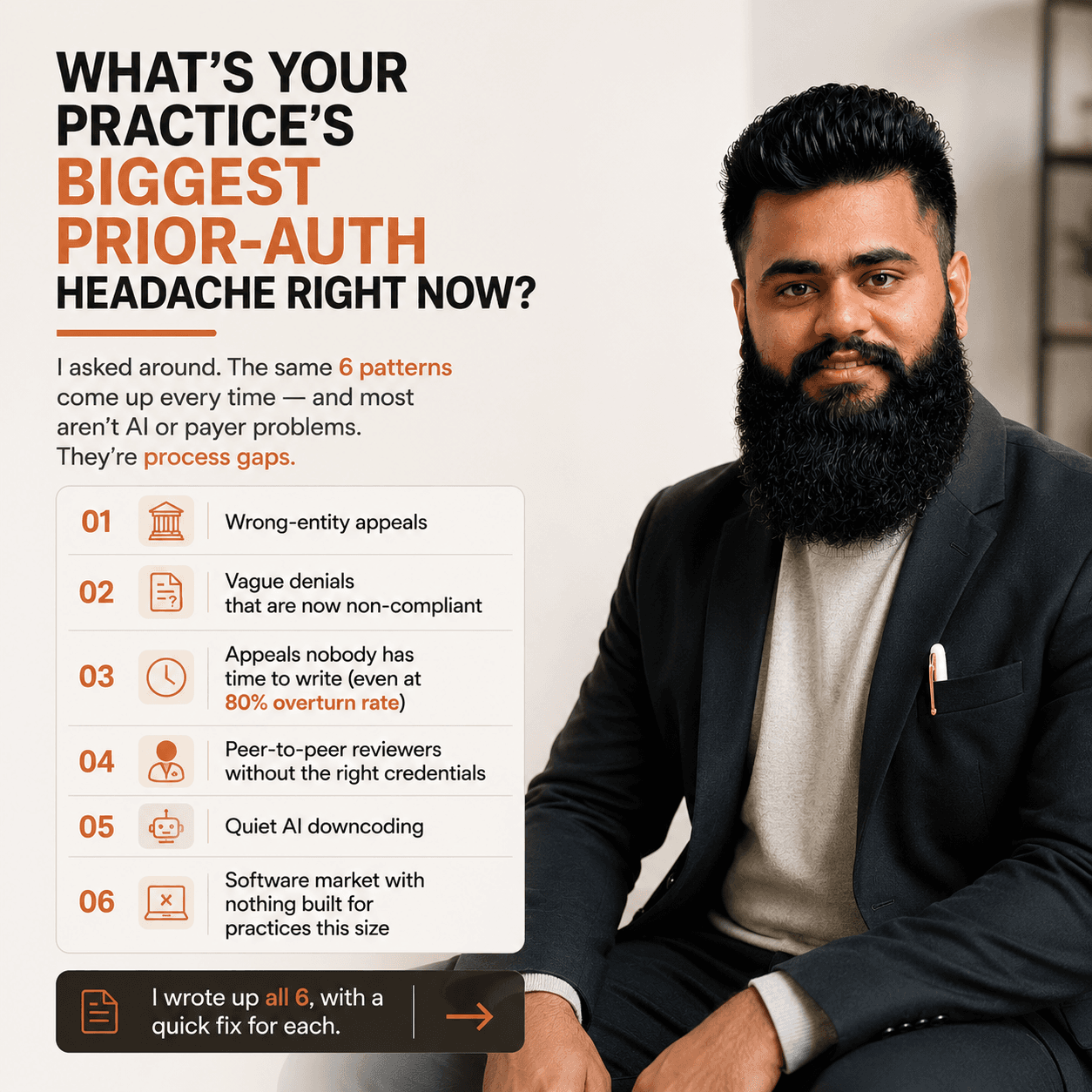
Denials that never get appealed. 80%+ of appealed Medicare Advantage prior authorization denials are overturned. Fewer than 12% of denials ever get appealed. The most common reason practices don't appeal isn't that the clinical case is weak — it's that writing the appeal takes the same 25–45 minutes the original letter did, and the admin staff doesn't have that time in a week already running at capacity.
For a patient, a denial that never gets appealed isn't a process failure. It's care they needed and didn't receive.
No visibility into what's happening. Most patients have no way to track where their prior authorization stands, whether it was submitted, whether it was denied, or whether anyone is working on an appeal. The process happens to them, not with them.
What most patients don't know is possible
Here's the part almost nobody tells patients: in many cases, a patient can file their own prior authorization or appeal directly with their insurer — not through the practice, as the patient themselves.
This matters for two reasons.
First, insurers process patient-filed appeals through a different channel than provider-filed ones. A patient appeal often has a separate deadline, a separate review process, and sometimes a better shot at an expedited determination when care is time-sensitive.
Second, a patient who can generate a structured, criteria-cited appeal letter on their own — rather than waiting to find out whether their practice has the bandwidth to file one this week — has real agency over their own care. They don't have to wait. They don't have to hope someone at the practice has time.
That's the piece of the AI adoption conversation that almost nobody is having: not just getting practices to use AI faster, but giving patients the same tools on their own side of the process.
What 37+ states now require — and why patients should know this
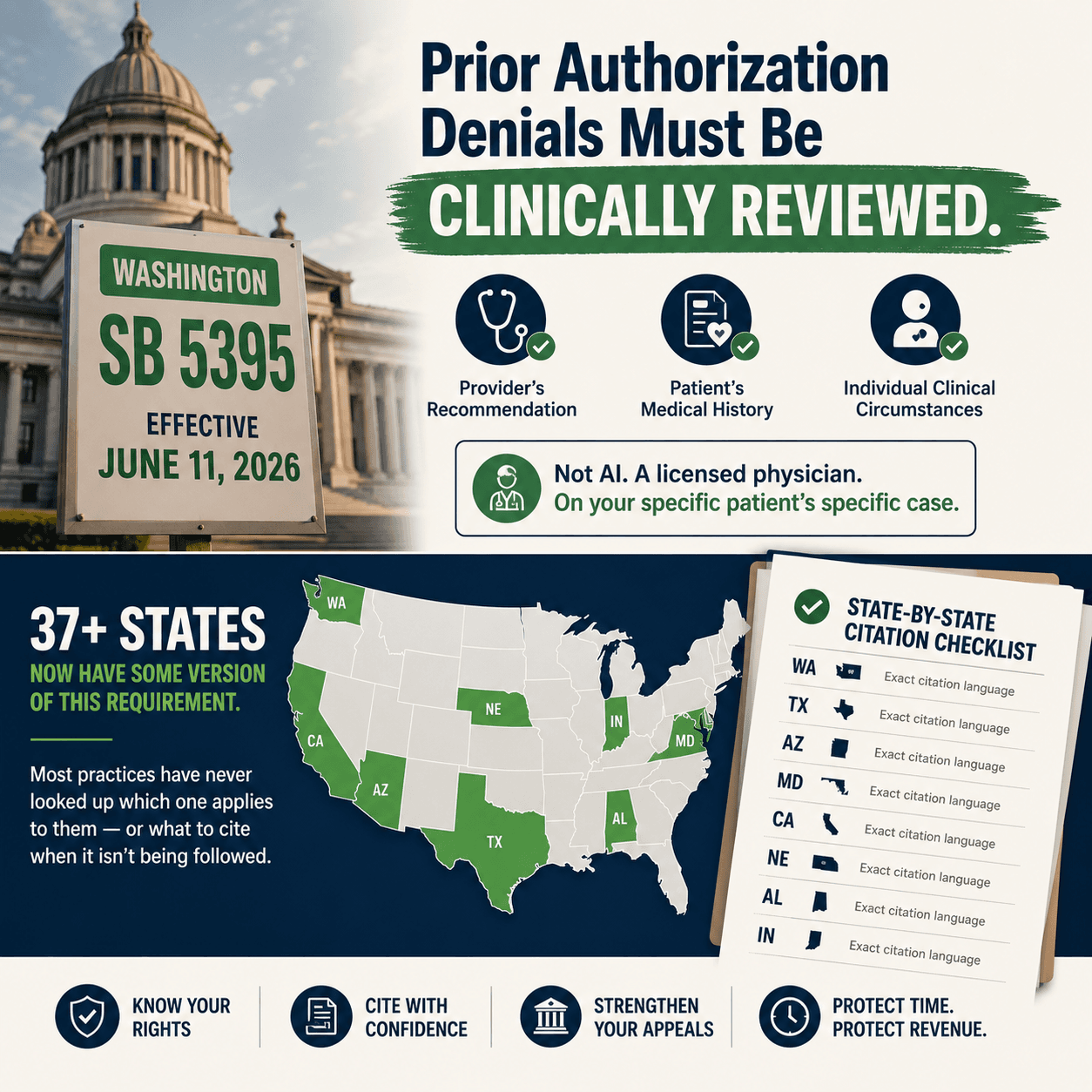
If you're in one of the 37+ states that now prohibit AI from being the sole basis for a medical necessity denial, you have a specific, citable legal right that most patients don't know exists.
Washington's SB 5395, the most specific law currently in effect, requires that when a denial is issued, the insurer must disclose the credentials, board certifications, and specialty of the clinician who had clinical oversight over the determination. That's not just a right for your doctor to ask about — it's a right you have as the patient whose care was denied.
If your denial came back without that information, or unusually fast for a complex case, you have a documented basis to ask whether a qualified human actually reviewed your specific situation — and to cite the law by name when you do.
What patients can actually do right now
Ask your practice directly whether a denial was appealed. Don't assume it's being handled. Ask specifically: was this appealed, when, and to which entity?
Ask for a copy of the denial letter. Under federal rules, you have a right to the specific denial reason. If you didn't receive it, request it in writing.
Check whether your state requires a licensed human to have reviewed your denial. Search your state name plus "prior authorization AI human review law" or check your state insurance commissioner's website.
Consider filing your own appeal if your practice doesn't have the bandwidth. Patient-filed appeals go through a different channel and can sometimes move faster, especially if care is time-sensitive.
Use tools that give you visibility. If your practice is on a platform that gives you a patient dashboard — with your own appointment history, PA status, and the ability to generate your own letters — use it. The more visible the process is to you, the less it can happen to you without your knowledge.
The honest bottom line
The AI adoption gap in healthcare admin isn't just a practice operations problem. It's a patient experience problem — because every delayed letter, every unappealed denial, and every piece of information a patient couldn't access is a real cost landing on a real person waiting for care.
The process shouldn't just happen to patients. They should be part of it.
That's the piece of Asaanbil that goes beyond what most practice-management platforms offer: patients on the platform have their own profile, their own records, and their own ability to generate a prior authorization or appeal letter directly — because the information and the tools shouldn't sit exclusively on the practice's side of the equation. asaanbil.com (https://asaanbil.com)
Comments (0)
Sign in to like or comment.
No comments yet.