The Weekly PA Triage: A 15-Minute Fix for a Problem Most Practices Don't Notice

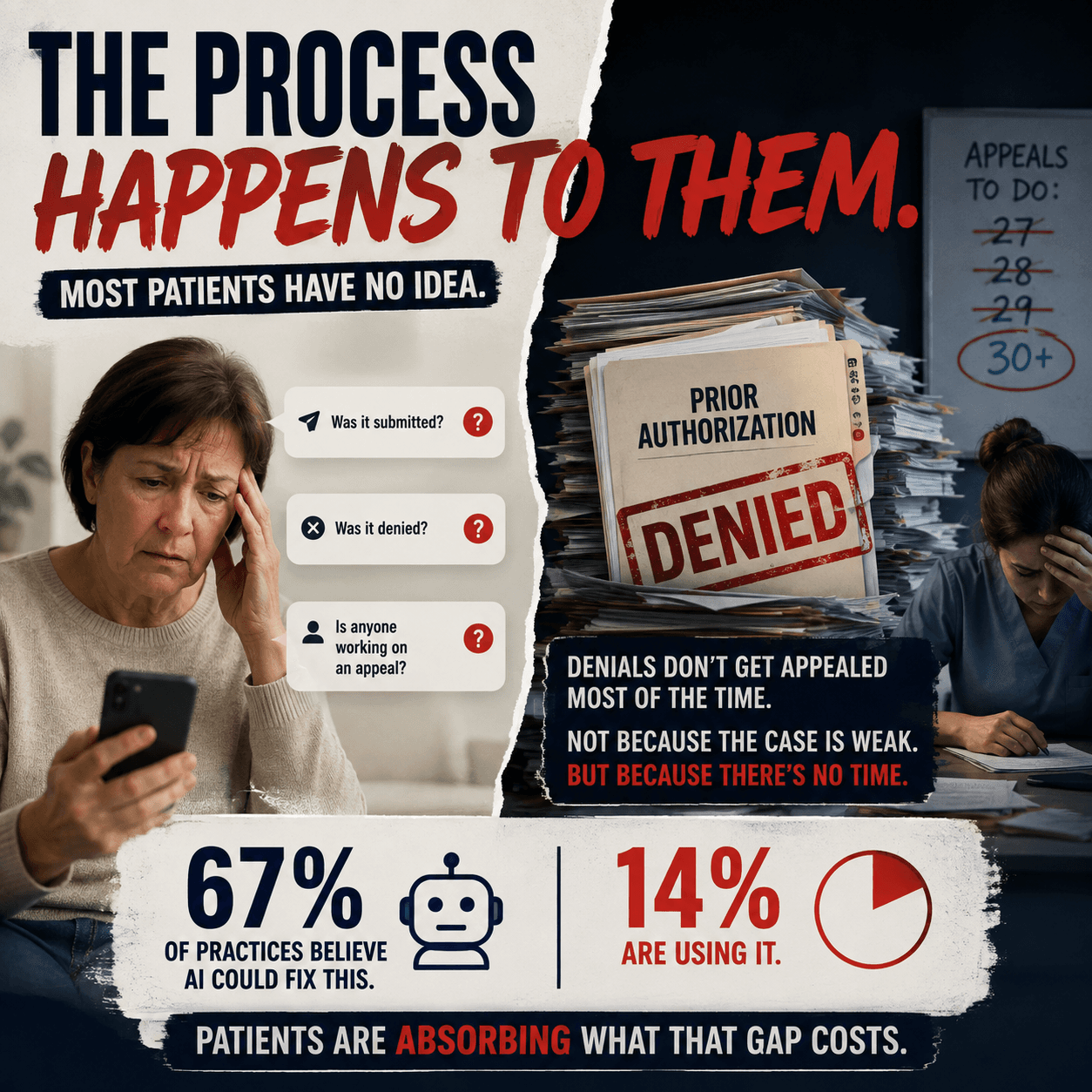
Most practices work prior authorizations and denials in the order they arrive. That feels fair. It's also the single easiest way to lose the ones that actually mattered most.
Why first-in-first-out is the wrong default
Not every PA or denial carries the same stakes. A missing-documentation denial on a routine follow-up imaging order isn't the same as a denial on a time-sensitive surgical case with an appeal deadline in five days. Worked strictly in arrival order, the urgent one waits behind three easier ones — and by the time it's reached, the window to fix it has narrowed or closed entirely.
A 15-minute weekly triage fixes this without adding staff or new software.
The triage system
Set aside 15 minutes at the start of each week. Sort every open PA and every open denial into three tiers.
Tier 1 — deadline-driven: anything with an appeal window closing in the next 7 days, or a standard PA decision approaching the CMS 7-day deadline without a response. These go first, no exceptions, regardless of how simple or complex the underlying clinical case is.
Tier 2 — high-value, no deadline pressure yet: surgical cases, high-cost imaging, specialty drugs — anything where a missed opportunity costs real revenue or delays significant care, but the clock isn't about to run out yet.
Tier 3 — routine, low urgency: standard imaging, therapy authorizations, anything with a wide window and comparatively low individual stakes. These fill the remaining time, not the first slot of the week.
Why this order, specifically
Deadline-driven cases go first because a missed window is often unrecoverable — no amount of clinical strength matters if the appeal wasn't filed in time. High-value cases go second because the cost of delay compounds with dollar value: a week's delay on a surgical case matters more than a week's delay on a routine physical therapy authorization. Routine cases go last, not because they don't matter, but because they carry the most slack — delaying them costs the least relative to the alternative.
This isn't about working harder or writing more letters. It's about making sure the 15-30 minutes each letter takes gets spent first on the case where a delay actually costs something real.
What to track alongside the triage
A simple running log, even a basic spreadsheet, makes the weekly sort faster every time it's repeated:
Date received and deadline, if any. Tier assigned. Status — drafted, submitted, pending, resolved. Outcome, once known.
After a few weeks, this log starts doing double duty. It becomes the record that shows which payers are consistently generating Tier 1 emergencies — which is its own useful pattern worth escalating separately, once it's visible in writing rather than just felt anecdotally.
What this actually buys back
This system doesn't reduce the total number of letters a practice has to write in a given week. What it changes is which letters get written under time pressure and which don't. A missed Tier 1 deadline is a lost case, full stop — no clinical argument, however strong, fixes a late appeal after the fact. Fifteen minutes of sorting at the start of the week is a small, fixed cost set against an otherwise avoidable, total loss.
The honest bottom line
Most practices already have the clinical and operational judgment to know which cases matter more when they stop and think about it. What's usually missing is a fixed 15 minutes to apply that judgment on purpose, instead of letting arrival order make the decision by default, case by case, all week long.
If the actual letter-writing time is still the bottleneck once triage is sorted out, asaanbil.com runs a free 10-letter pilot, no card required, so the highest-priority letters get written faster too. asaanbil.com (https://asaanbil.com)
Comments (0)
Sign in to like or comment.
No comments yet.