The 6 Prior Auth Headaches That Show Up Every Time
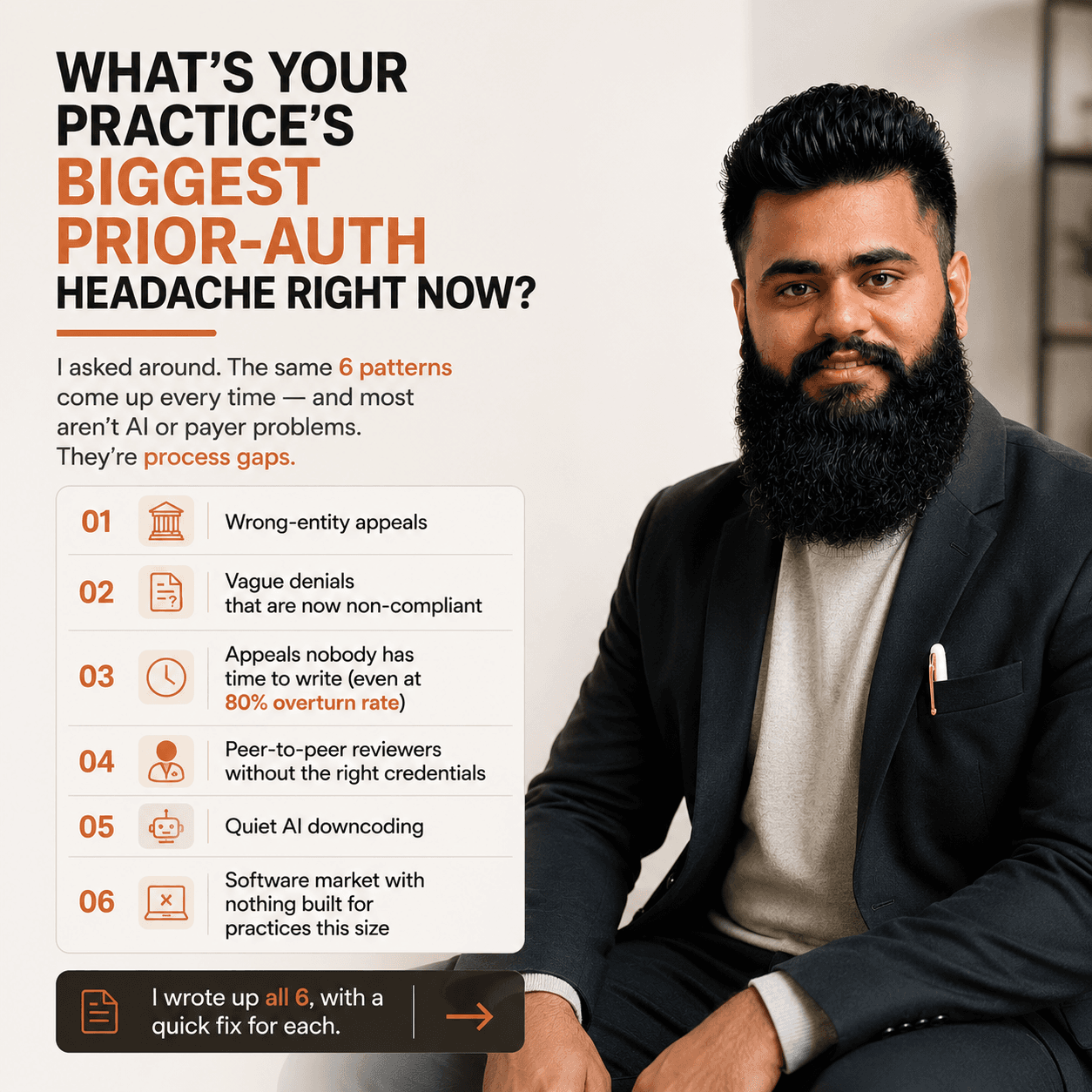
Ask independent practices what their biggest prior-auth headache is, and the specifics change every time — but the underlying patterns don't. Across research, reporting, and the operational data available on this problem, the same six issues show up constantly.
Most of them aren't really "AI problems" or "payer problems" in isolation. They're process gaps that compound specifically because independent practices don't have a dedicated team to catch them the way a hospital system does.
1. Appeals sent to the wrong place
A common and largely invisible failure mode: most advanced imaging prior authorization is reviewed by a delegated entity — EviCore, Carelon, or Evolent/RadMD — not the payer directly. An appeal sent to the payer for a denial one of these entities actually issued gets returned unfiled, while the real appeal clock keeps running the entire time it sits unprocessed.
Fix: read the letterhead and phone number on the denial notice before drafting anything. That single step confirms who actually reviewed the request far more reliably than assuming based on the payer's name.
2. Denials that don't say why
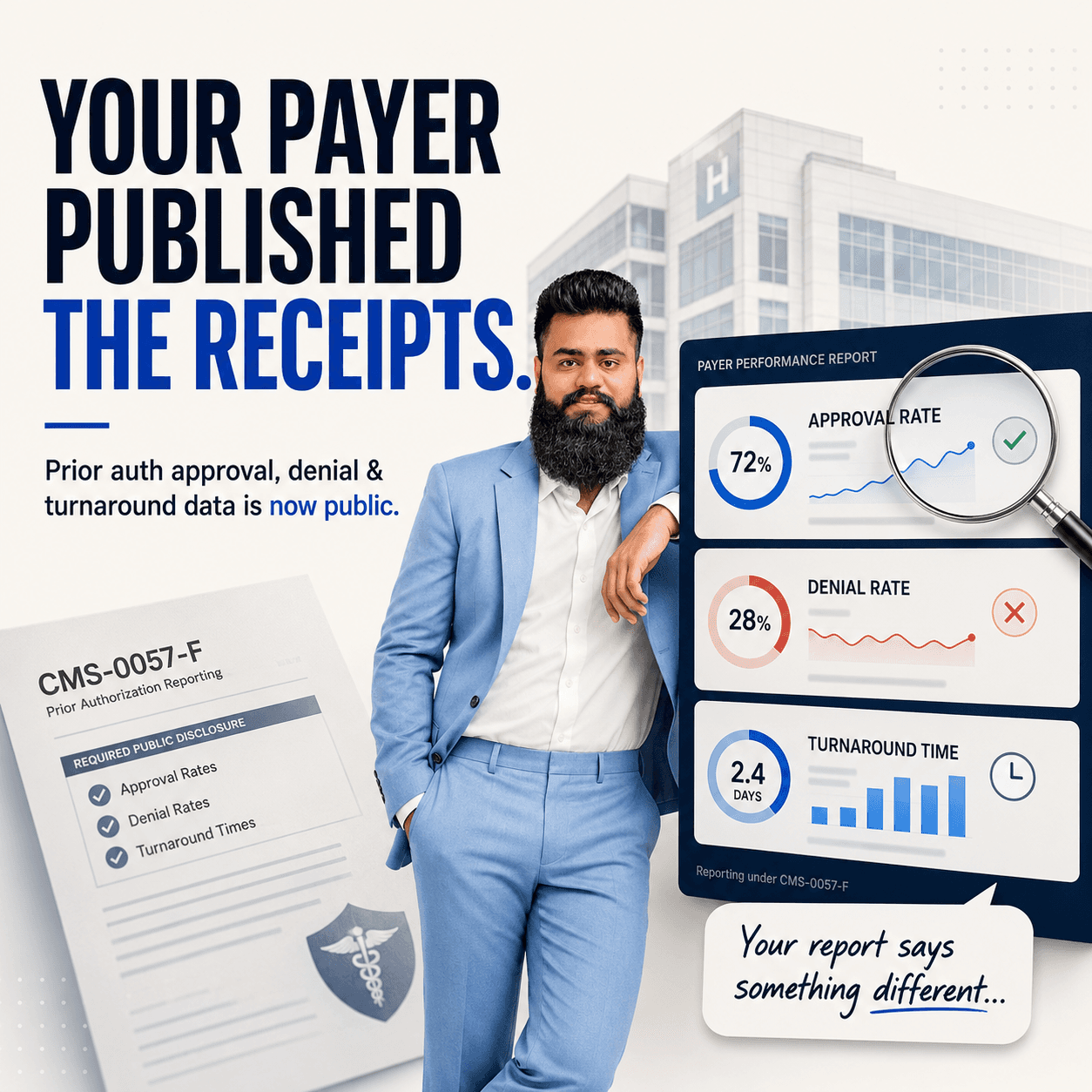
"Does not meet criteria," with nothing else attached, used to be standard. As of 2026, under CMS-0057-F, it's non-compliant for imaging denials specifically — payers are required to name a specific reason: alternative imaging available, insufficient conservative treatment, or missing clinical documentation.
Fix: cite the missing requirement directly in the appeal and request the specific reason before addressing the clinical case at all. It shifts part of the burden back to the payer to explain itself.
3. Appeals that never get written
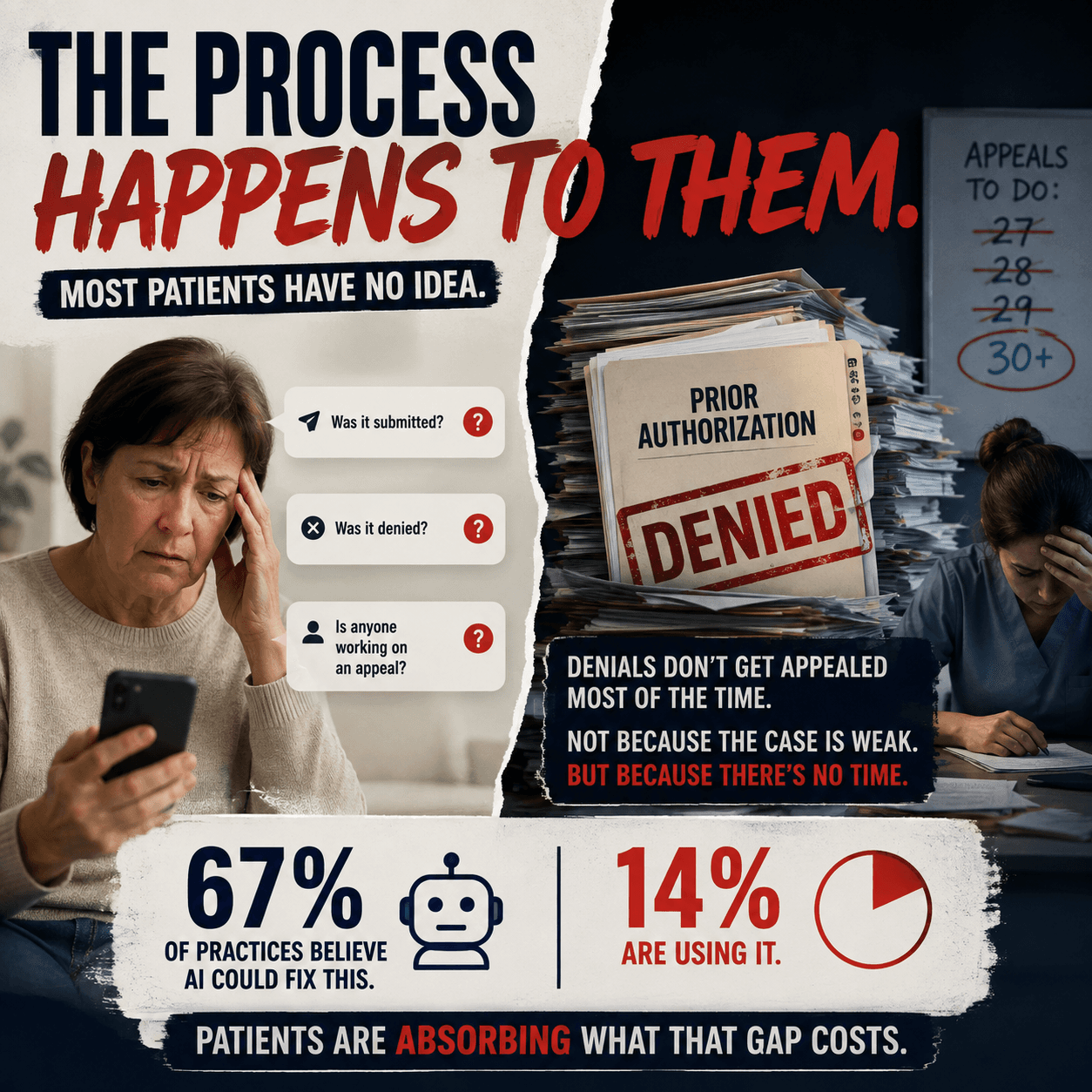
The most common and most expensive headache on this list. Roughly 80% of denials are overturned when appealed. Fewer than 11% of practices ever appeal — mostly because writing the appeal takes the same 25-45 minutes the original prior authorization letter did, stacked on top of an already full week.
Fix: a 15-minute weekly triage — sorting open cases into deadline-driven, high-value, and routine, and working them in that order instead of arrival order — protects the appeals that would actually win from getting buried behind easier, lower-stakes work.
4. Peer-to-peer reviewers without the right qualifications
Only 16% of physicians report the health plan representative on a peer-to-peer call usually has appropriate qualifications for the case — despite industry pledges stating every medical-necessity denial is reviewed by "a licensed and qualified clinician."
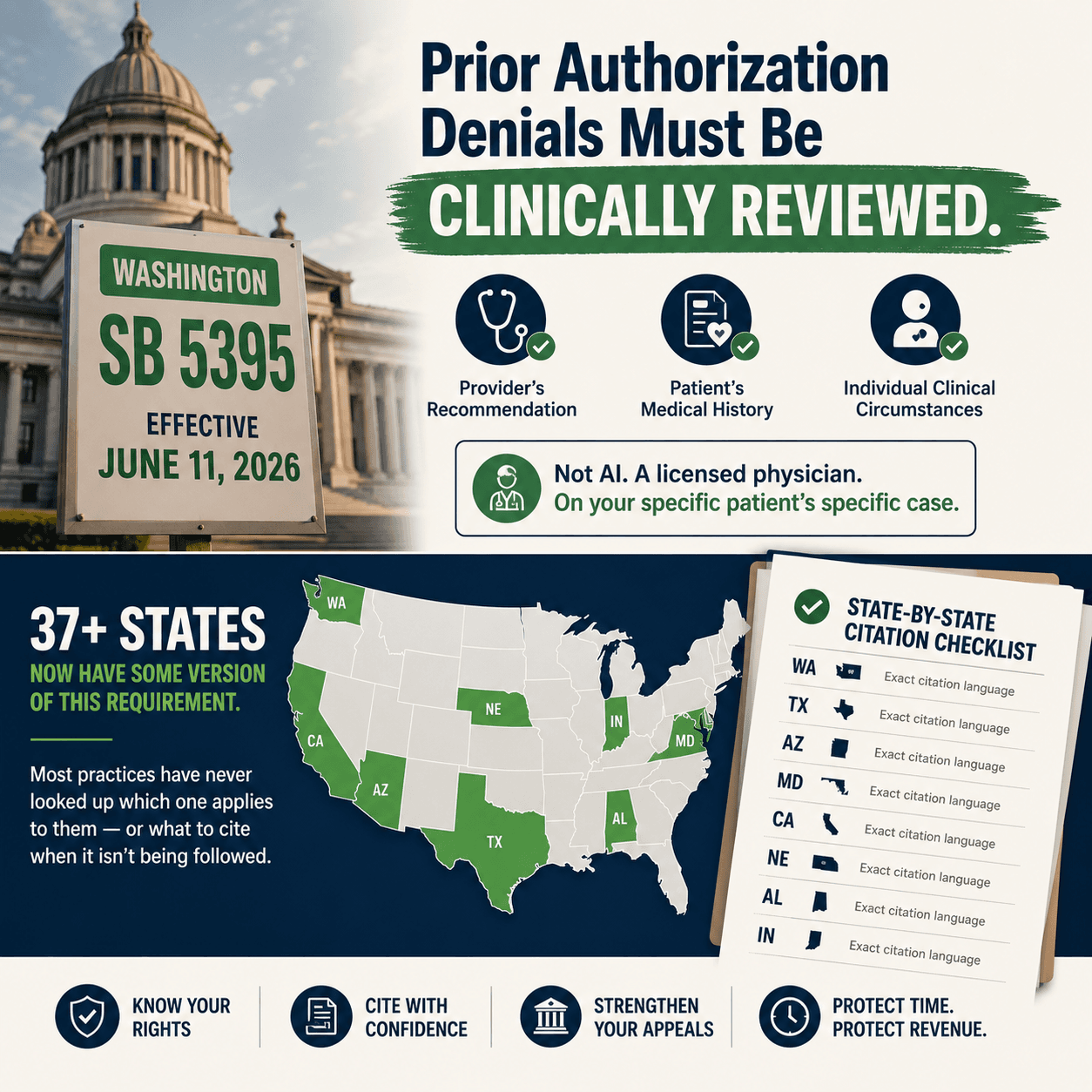
Fix: ask directly about the reviewer's specialty and qualifications before the call starts, and document the answer. Where applicable, cite your state's specific AI-and-human-review law by name — 37+ states now have one.
5. Claims that quietly pay less than billed
AI-driven "downcoding" reduces what a claim pays out without ever issuing a denial or requiring a physician to review the change. It doesn't trigger the same review reflex a denial does, which is exactly why it's spreading — seven states have legislation moving on this in 2026, and Indiana's is already in effect as of July 1.
Fix: compare billed-to-paid on every claim, not only denials, and track discrepancy patterns by payer and CPT code.
6. A software market with nothing built for this size of practice
Free tools are largely built around pharmacy PA. Enterprise platforms are priced and built for hospital systems with dedicated IT teams. Almost nothing sits in between, sized for a 1-10 physician specialty practice's actual procedure mix, payer mix, and volume.
Fix: before buying anything in this category, ask what the tool was originally built for and whether pricing actually scales with real volume — not a flat enterprise-style rate.
The honest bottom line
None of these six problems require a bigger staff to fix. Most require a specific, known habit change — checking a letterhead, citing a missing requirement, sorting by deadline instead of arrival order, asking a qualifications question out loud. The pattern across all six is the same: independent practices absorb costs that a larger organization would have a dedicated process to catch automatically.
If the letter-writing and appeal side of any of these six is the part actually eating your team's time, asaanbil.com runs a free 10-letter pilot, no card required. asaanbil.com (https://asaanbil.com)
Comments (0)
Sign in to like or comment.
No comments yet.