The Insurer Prior Authorization Pledge Is a Year Old — Here's What's Actually Changed
In July 2025, more than 50 major health insurers stood alongside HHS Secretary Robert F. Kennedy Jr. and CMS Administrator Mehmet Oz in Washington and pledged to fix prior authorization. UnitedHealthcare, Aetna, Cigna, Humana, Elevance Health, dozens of Blue Cross Blue Shield plans — nearly every major name in the industry signed on.
A year later, the results are in. They're modest, and physicians aren't convinced.
What the pledge actually promised
The AHIP pledge (https://www.ahip.org/news/press-releases/health-plans-take-action-to-simplify-prior-authorization) laid out six commitments, most tied to a January 1, 2026 goal date:
- Reduce the scope of claims requiring prior authorization, based on each plan's local market
- Honor existing prior authorizations for 90 days when a patient switches insurance mid-treatment
- Give clear, plain-language explanations of denials, including appeal instructions
- Standardize electronic prior authorization using FHIR APIs, targeting real-time responses for at least 80% of electronic approvals — but not until 2027
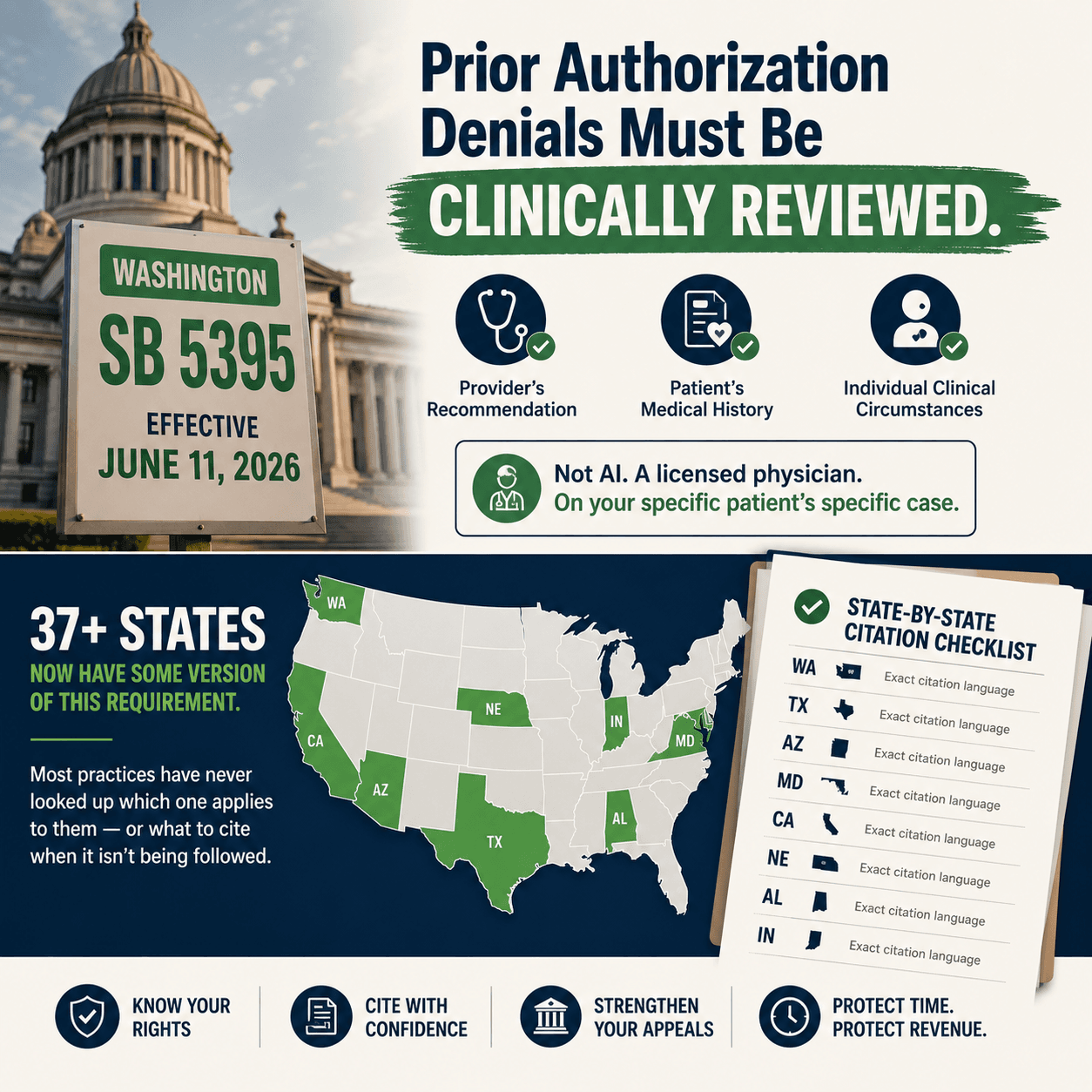
- Ensure every medical-necessity denial is reviewed by a licensed, qualified clinician — described by AHIP as a standard "already in place," not a future goal
That last commitment is the one worth paying closest attention to, because it's the one insurers claim requires no waiting at all.
The scorecard so far
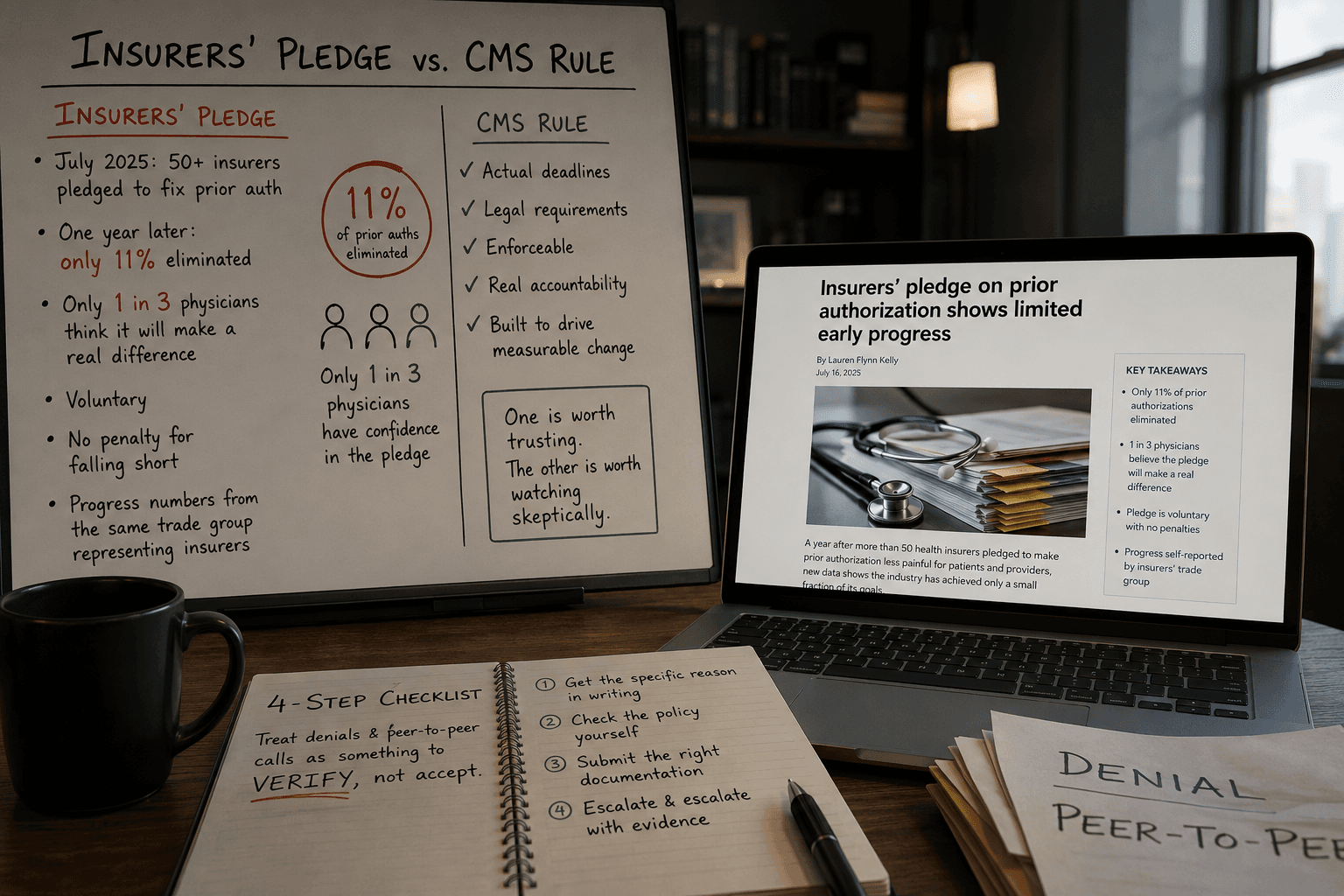
By spring 2026, AHIP's own progress reporting showed insurers had eliminated roughly 11% of prior authorizations (https://www.fiercehealthcare.com/payers/insurers-have-eliminated-11-prior-authorizations-under-reform-pledge) under the pledge. That's real movement, but a long way from the sweeping relief the July 2025 announcement implied.
Physician sentiment reflects that gap. Only one in three physicians (33%) believe the pledge will make a meaningful difference. AMA president Dr. Bobby Mukkamala put the association's posture plainly when the pledge was announced: physicians and patients "will need specifics demonstrating that the latest insurer pledge will yield substantive actions," and the AMA said it would be "scrutinizing implementation meticulously."
Why the peer-to-peer commitment is the real test
Here's where the pledge runs into a wall of physician skepticism. AHIP says every non-approved clinical request is already being reviewed by "a licensed and qualified clinician" — present tense, already happening.
Physicians report a very different reality. Just 24% say medical-necessity denials are consistently reviewed by appropriately qualified clinicians. And on the peer-to-peer call specifically — the moment a physician is supposed to talk doctor-to-doctor with the person who denied their patient's care — only 16% say the health plan representative on the other end often actually has the right qualifications.
That's not a rollout delay on a 2027 goal. That's a commitment insurers say is already fully in effect, reported as functionally broken by the people in the room.
Why a voluntary pledge behaves differently than a federal rule
It's worth separating the pledge from the one reform effort that comes with actual enforcement: CMS's Interoperability and Prior Authorization Final Rule (https://www.cms.gov/newsroom/blog/moving-prior-authorization-21st-century), which set hard deadlines — 7 calendar days for standard decisions, 72 hours for expedited ones — with compliance obligations behind it.
The AHIP pledge has neither deadline enforcement nor a penalty for a plan that signs on and quietly underdelivers. The progress numbers reported so far also come from AHIP itself, the trade association representing the insurers making the promise — not an independent auditor. None of that means the pledge is meaningless. It means the honest posture toward it is closer to "worth watching" than "worth relying on."
What this actually means for your practice
- Ask directly about a peer-to-peer reviewer's qualifications before the call happens. Given that only 16% of physicians report the reviewer usually has appropriate credentials, this is a reasonable question to ask upfront, not an accusation.
- Document every peer-to-peer interaction — date, reviewer name and stated specialty, outcome. If the "licensed and qualified clinician" commitment isn't being consistently honored, a paper trail matters more than a memory of the call.
- Track your top payers against their own public commitments. AHIP and CMS are beginning to publish plan-level progress dashboards — check whether a payer you deal with constantly is closer to the 11% average or meaningfully behind it.
- Don't let denial volume shape your appeal behavior on faith alone. With three-quarters of physicians reporting denials have risen over five years spanning multiple prior "reform" efforts, a denial today deserves the same scrutiny it would have before any pledge existed.
The part practices can control regardless of what insurers do
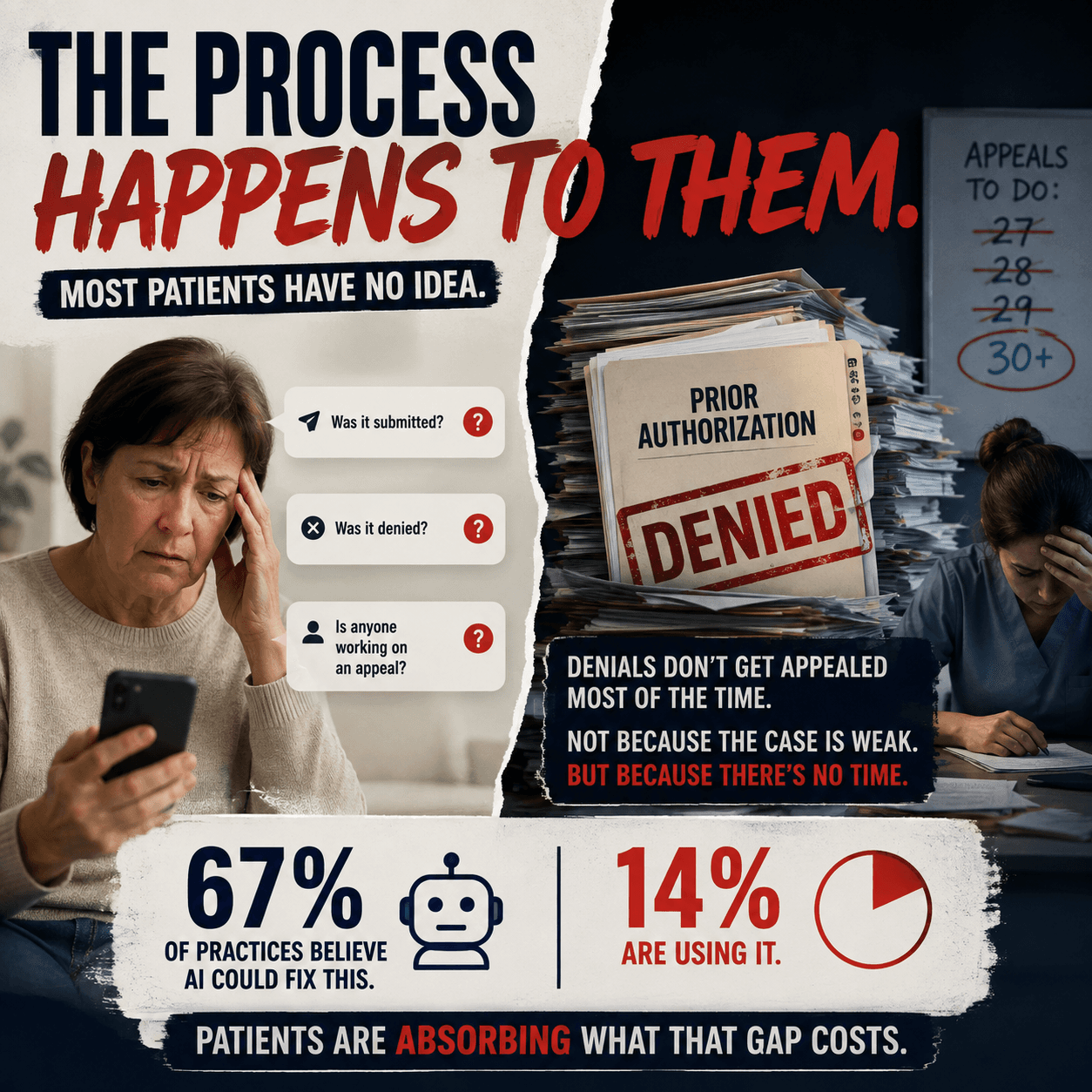
Waiting on a voluntary industry pledge isn't a strategy. Documenting denials, verifying reviewer qualifications, and appealing more of what genuinely deserves it is. That last piece is where the actual bottleneck usually sits — not the willingness to appeal, but the time it takes to write a criteria-cited letter from scratch. That's the specific gap asaanbil.com's claims and appeals module (https://asaanbil.com) is built to close: appeal letters drafted directly from a denial notice, structured the same citation-backed way as the original prior authorization, with a physician still reviewing and approving before anything goes out.
The pledge may eventually deliver on its promises. Until the data says it has, the safest assumption for a practice is that nothing has structurally changed yet — and to keep operating accordingly.
Comments (0)
Sign in to like or comment.
No comments yet.